Starbucks Scrapped Its AI Inventory Tool After 9 Months. Here's What Went Wrong.
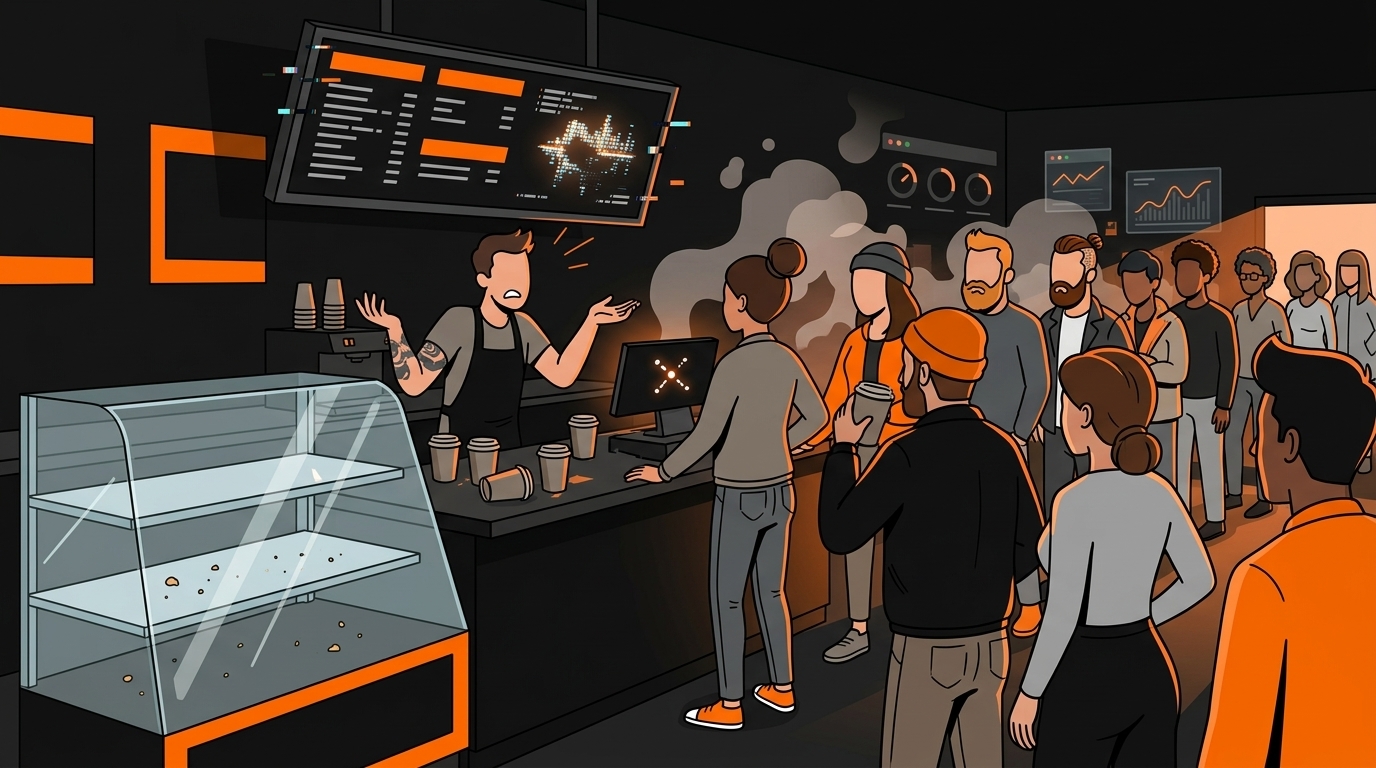
Your barista just counted the oat milk. The system says you have 14 cartons. You actually have 3. The AI inventory tool that was supposed to save time is now creating a crisis, and nobody caught it until the morning rush hit and you ran out of the most popular item on your menu.
Starbucks spent nine months building an AI-powered inventory management tool. They rolled it out across North America. Baristas hated it. Counting errors stacked up. And in May 2026, Starbucks quietly scrapped the whole thing. Reuters broke the story, then Fortune, CNBC, Quartz, and Bloomberg all followed. A Startup Fortune postmortem called it "a lesson for every enterprise betting on agentic AI."
If a $200 billion company with nine months of development couldn't get AI inventory right, what does that mean for your 3-location operation?
What Actually Happened with Starbucks' AI Inventory Tool?
Starbucks deployed an AI-powered system designed to automate stock tracking across its North American locations. The tool was supposed to count inventory, predict usage patterns, and reduce waste. Instead, it introduced counting errors that made baristas' jobs harder, not easier.
According to Reuters (May 21, 2026) and Fortune (May 28, 2026), the tool repeatedly produced inaccurate counts. Baristas who had been doing inventory manually for years suddenly had a system that told them they had stock they didn't have - and flagged shortages for items sitting on the shelf. The errors weren't minor. They cascaded into ordering mistakes, which cascaded into waste, which cascaded into frustrated staff who stopped trusting the system entirely.
Bloomberg separately reported that Starbucks is now tying tech workers' bonuses to AI usage metrics. So while this specific tool failed, the company is doubling down on AI internally. That tells you something important: the problem wasn't that AI can't handle inventory. The problem was how this particular tool was deployed.
Why Did the Tool Fail When It Was Built by a $200 Billion Company?
The answer is the same reason most restaurant technology fails: it was built by people who don't do the work.
A Restaurant Dive op-ed published on June 18, 2026 made this exact point: "Restaurant software was built by people who never worked a Friday night close." That's not just a catchy headline. It's the root cause of the Starbucks failure.
When a barista counts oat milk, they're not just reading numbers off a shelf. They're checking expiration dates. They're noticing that the cartons in the back are dented. They're mentally calculating how much they'll need for the afternoon rush based on how many mobile orders came in this morning. An AI tool that counts boxes without understanding the context behind the count will always produce numbers that don't match reality.
The tool failed because it treated inventory as a data problem. Baristas know it's a workflow problem. Those are very different things.
How Does Bad Inventory AI Create a Chain Reaction in Your Kitchen?
Think about what happens when your inventory count is wrong. Not slightly wrong - catastrophically wrong, the way Starbucks' tool was.
Monday morning: The AI says you have 40 pounds of chicken breast. You actually have 12. Your prep cook trusts the system and doesn't double-check. He preps for a normal day.
Tuesday at 6 PM: You run out of chicken during the dinner rush. Your kitchen manager is improvising substitutions. Servers are apologizing to tables. A 4-top walks out. That's $200 in lost revenue from one table, plus the negative review they're writing right now.
Wednesday: You place an emergency order at premium pricing because you didn't plan for the shortage. Your food cost for the week just spiked 4%.
This is the chain reaction PYMNTS.com described in their May 22 report on the Starbucks failure. Bad count leads to wrong orders, which leads to wasted product, which leads to frustrated staff, which leads to a scrapped tool. The damage isn't just the tool cost - it's the operational chaos it creates along the way.
What's the Difference Between AI Inventory That Works and AI Inventory That Doesn't?
Tools that work for restaurant inventory share three traits:
They augment the human count, not replace it. The best inventory tools let staff count manually and then flag discrepancies automatically. They don't pretend they can count better than a person standing in front of the shelf.
They learn from corrections. When a barista overrides the AI's count, the system should update its model. If it keeps getting oat milk wrong and the human keeps correcting it, the AI should adjust. Tools that ignore human corrections are just expensive guesswork.
They connect to ordering. Inventory data is useless in isolation. It needs to flow into your ordering system so you can automate reorders based on actual usage, not predicted usage from an algorithm that doesn't know you just ran a promotion on oat milk lattes.
The Starbucks tool had none of these traits. It was a standalone system that tried to replace the count instead of improving it. When baristas found errors, there was no feedback loop. The system kept making the same mistakes.
How Can Independent Restaurants Avoid the Same Mistake?
You don't have Starbucks' budget, which means you also don't have Starbucks' margin for error. When a tool fails at a 35,000-location chain, it's a news story. When it fails at your restaurant, it's a $3,000 mistake you can't afford.
Here's what to do instead:
Start with your workflow, not the tool. Before you buy any AI inventory system, map how your team actually counts today. How long does it take? Where do errors happen? What gets skipped when the dinner rush hits and your closer is exhausted? The answers tell you what the tool needs to solve.
Test with one category first. Don't roll out AI inventory across your entire menu. Pick one category - proteins, produce, whatever causes the most pain - and test for 30 days. If the tool can't get chicken breast counts right, it's not going to get your whole menu right.
Demand override capability. If your staff can't easily correct the AI's counts, walk away. The tool needs humans in the loop, not humans serving the tool. Your cooks have been counting inventory since before the AI was born. Respect that experience.
Measure before and after. Track waste, ordering accuracy, and time spent on inventory for 30 days before the tool and 30 days after. If you can't measure the improvement, you bought a problem, not a solution.
This is exactly what our SWOT assessment does for restaurants. We map your actual operation first - your workflow, your pain points, your staff's daily reality - and then recommend tools that fit. Not the other way around.
What Should You Do Next?
The Starbucks story isn't anti-AI. It's anti-bad-deployment. AI inventory tools can work - when they're built around how restaurants actually operate.
If you're thinking about adding AI to your inventory, ordering, or any part of your operation, start with a clear picture of what's actually broken. That's what the SWOT assessment gives you: a map of your operation before anyone tries to sell you a tool.
Want to see where your restaurant stands? Take our free AI Readiness Check - it takes 2 minutes.
Next step
Choose the next practical step for your restaurant.
Check your restaurant's AI readiness or use the SWOT path to identify the most useful operational opportunities.
Keep reading
Related posts
More practical guidance for restaurant operators who want less busywork and better follow-through.
The Restaurant Profitability Gap: Why AI-Using Operators Are Pulling Ahead in 2026
A restaurant owner told me last week that her competitor down the street seems to be thriving while she's barely breaking even. Same neighborhood, same foot traffic, similar menu. The difference isn't
Zume Spent $400M Learning That AI Without a Workflow Map Fails. Miso Just Bought the Wreckage for Pennies.
You walk into your kitchen at 6 AM. The delivery truck is late. Your prep cook called out. The new inventory system you just bought? Nobody's logged into it since Tuesday. It's sitting there, gatherin
How to Automate Par Level Calculations with AI for Your Restaurant
Your par levels were set when you opened. Maybe updated once since then, when you added that seasonal salad or killed the soup nobody ordered. Meanwhile, your sales mix changed, your menu shifted, and