Burger King's AI Coaches Workers on Friendliness. Yours Should Coach You on Scheduling.
You walk into your restaurant at 6 AM. The delivery truck is late. Your prep cook called out. And the scheduling app your manager swears by just sent everyone the wrong shift times. Again. Meanwhile, Burger King just decided the biggest problem worth solving with AI is whether your drive-thru worker said "please" loud enough.
Burger King deployed an AI tool called "Patty" in 500 locations. It listens to drive-thru conversations through headsets and scores workers on friendliness metrics - things like "please," "thank you," and "welcome." NBC News, The Guardian, and CX Today all reported it in July 2026. Workers have opinions. The internet has stronger opinions. And somewhere in between, restaurant owners are asking themselves: is this what AI is for?
What Does Burger King's "Patty" AI Actually Do?
Patty is a real-time hospitality coaching system. Workers wear headsets that capture their speech during drive-thru interactions. The AI analyzes tone, word choice, and speed, then delivers immediate feedback on friendliness scores. Think of it as a mystery shopper that never clocks out and never gives anyone the benefit of the doubt.
The system listens for specific hospitality markers: did the worker greet the customer, use polite language, and maintain a warm tone throughout the interaction? It scores each exchange and provides feedback either in real time or after the shift ends. Burger King's pitch is consistency - every customer gets the same friendly experience regardless of which location they visit or which crew member takes their order.
The 500-store rollout is a pilot. If it works, expect every QSR chain to copy it within 18 months. That's how restaurant tech adoption works - one big chain tests it, the trade press covers it, and suddenly every franchise owner gets an email about "exciting new technology."
Where's the Line Between Coaching and Surveillance?
Here's the question nobody at Burger King's corporate office seems to be asking out loud: coaching gives feedback TO the worker. Surveillance reports ON the worker. Patty does both. Your staff will figure that out fast, and they won't appreciate it.
When an AI listens to every conversation and scores your performance, that's not coaching - that's monitoring with a friendlier name. Real coaching involves a human who understands context. A worker who sounds curt might be dealing with a customer who just cursed at them through the speaker. An AI sees a low friendliness score. A manager sees a person having a bad day on a 10-hour shift.
The restaurants that will actually benefit from AI coaching are the ones that use it as a training supplement, not a replacement for human management. Use it to identify patterns across shifts - "your Tuesday evening crew consistently skips greetings" - rather than to flag and punish individual workers. Pattern recognition is where AI shines. Individual performance policing is where it creates resentment.
Consider what happens when workers know they're being scored on every interaction. Some will perform better. Most will perform differently - more scripted, less genuine, and constantly anxious about a number they can't fully control. That's not hospitality. That's theater.
What Should Your AI Actually Be Doing Instead?
The real labor problem in restaurants isn't friendliness scores. It's scheduling chaos. Overstaffed Tuesdays, understaffed Saturdays, and managers spending 5-8 hours a week juggling shift swaps, callouts, and availability changes. That's according to multiple industry surveys - and if you've ever spent your Sunday night texting "who can come in tomorrow," you already know the number is real.
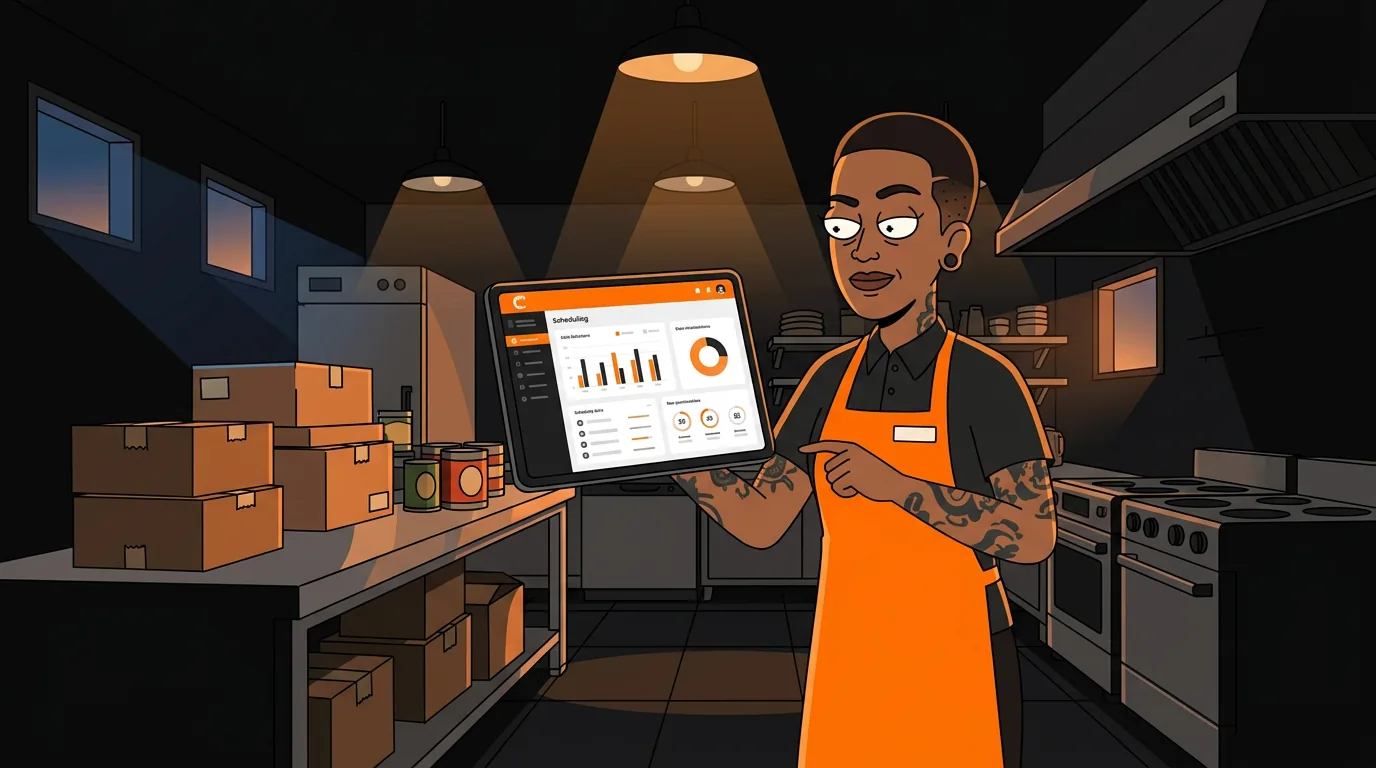
Restaurants that automate scheduling save 5-8 hours per manager per week. That's not a projection from a vendor's marketing deck - that's what operators consistently report when they switch from spreadsheet-based or text-message scheduling to dedicated tools. Apps like 7shifts, Homebase, and HotSchedules handle availability tracking, shift swapping, and labor cost forecasting automatically.
Your AI should be fixing the schedule, not policing the smile. One of those solves a problem that costs you real money every week in overtime, overstaffing, and manager burnout. The other just makes your best workers paranoid about their tone of voice while they're trying to remember if table 12 has a nut allergy.
The Tools That Actually Move the Needle
If you're going to put AI in your restaurant, start with the problems that bleed money every single day:
Scheduling automation. Tools like 7shifts ($35-150/month depending on locations) and Homebase (free tier available) handle shift creation, availability management, and labor cost tracking. Managers stop spending their evenings building schedules in Excel and start spending 20 minutes reviewing what the algorithm proposed.
Inventory tracking. Systems like BlueCart and MarketMan track food costs in real time, flag waste patterns, and automate vendor ordering. When your chicken cost spikes 12% and nobody notices for three weeks, that's money evaporating silently.
Labor cost forecasting. The best scheduling tools integrate with your POS to predict busy periods based on historical data. Instead of staffing based on gut feeling ("Fridays are always busy"), you staff based on what actually happened the last 12 Fridays with similar weather and local events.
These tools don't require a Google Cloud partnership or a 500-store pilot program. They cost $50-200/month, deploy in a week, and start saving money immediately.
How to Deploy AI Your Staff Won't Actually Sabotage
The difference between AI that your team embraces and AI that they quietly work around comes down to three things:
Transparency first. If you're tracking anything - schedules, performance, sales - tell your team exactly what you're tracking and why. The fastest way to destroy trust is to deploy monitoring tools in secret and hope nobody notices. They always notice.
Start with scheduling, not behavioral monitoring. Scheduling optimization directly benefits workers. They get more predictable hours, easier shift swaps, and fewer last-minute "we need you here in 30 minutes" calls. That's a tool they'll actually use and appreciate.
Build a feedback loop, not a reporting loop. Use AI data to improve systems, not to write up individuals. If the data shows your Tuesday crew consistently skips greetings, that's a team-wide training opportunity - not a write-up for one person who was probably slammed with three DoorDash orders at once.
69% of restaurants are now adopting AI, according to Restaurant Technology News. The ones that succeed will be the ones that deploy it where it actually helps operations - scheduling, inventory, vendor management - rather than where it just sounds innovative at a franchise conference.
What Happens After You Deploy Scheduling AI
The first week, your manager will still check the schedule manually out of habit. They'll double-check every shift the algorithm creates. By week three, they'll stop checking and start trusting. By month two, they'll have 5 extra hours they didn't know existed.
Some owners use that time to work on the business instead of in it - reviewing numbers, building vendor relationships, planning the next quarter. Others use it to actually take a day off for the first time in months. One operator told us their scheduling manager went from spending 8 hours a week on schedules to spending 45 minutes. She used the extra time to finally fix the broken prep workflow that had been driving food costs up for six months.
The restaurants seeing real ROI from AI started with one problem - usually scheduling or inventory - and proved it worked before expanding. They didn't buy a platform at a trade show and hope for the best. They didn't deploy AI headsets to score their workers' friendliness while their schedule was still a group text called "Friday Night."
Start where the pain is real. Start with the schedule.
Want to know where AI fits your restaurant? Take 2 minutes - no jargon, no sales pitch, just a clear picture of your biggest opportunities: clawprime.ai/quiz
Next step
Choose the next practical step for your restaurant.
Check your restaurant's AI readiness or use the SWOT path to identify the most useful operational opportunities.
Keep reading
Related posts
More practical guidance for restaurant operators who want less busywork and better follow-through.
How to Use AI to Handle Shift Call-Outs Without Manager Scrambling
It's 10 AM on a Saturday. Your 6 PM line cook just texted "can't make it." You have 8 hours and 30 contacts to call. Here's how an AI agent handles this in under 2 minutes - without you touching your
How to Build an AI Layer on Top of Toast POS
Your Toast POS captures every transaction, every labor hour, every menu item sold. It gives you charts. What it doesn't give you is a recommendation. Here's how to build the layer that turns your data

How to Use AI to Detect Overtime Before It Happens in Your Restaurant
You just ran payroll. Three servers hit overtime last week. One racked up 12 hours of time-and-a-half. You didn't know until the damage was already done.